The Ledger Letter
Finance Studio Advisors · Sunday, October 11, 2026
 

Coffee Beans Are Down 28% From the Peak. Your Bag of Coffee Isn’t.

Arabica futures ended the week at 287.6 cents a pound, roughly 28% below last October’s peak near $4. The bean has been getting cheaper for a year. The bag has not. The average pound of ground coffee cost $9.30 in August, 4.8% more than a year earlier. Prices on a store shelf rise fast and fall slowly. Wednesday’s September CPI will show whether the drop has started to reach the checkout line.
 
The Breakdown
Today’s disagreement: the futures market says coffee is getting cheaper; the grocery shelf says it has not heard the news yet.
 
01
The Bean
Arabica futures finished the week at 287.60 cents a pound, down 1.84%, per World Coffee Index. On Tuesday they had briefly topped $3.
02
The Supply
Brazil shipped 236,000 tonnes of coffee in September, more than 20% above a year earlier. Prices fell 3.9% the day the number landed.
03
The Shelf
Ground coffee averaged $9.30 a pound in August, per the Bureau of Labor Statistics. Retail coffee prices were 6.1% higher than a year earlier, per the USDA.
A Message From Our Partner
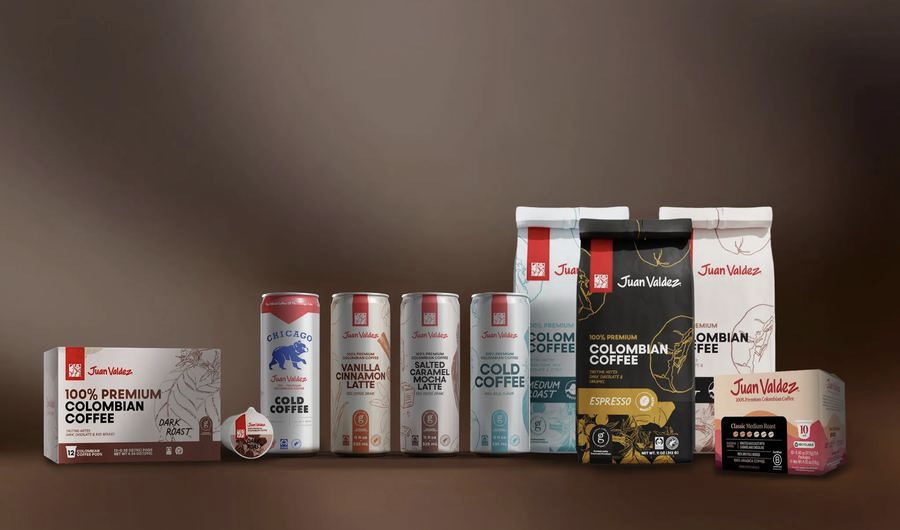
Full Juan Valdez retail lineup.
Most coffee pitches start at the shelf. Start at the mill instead.
Green Coffee Company owns 45 farms in Colombia. More than 10,000 acres. Over 10 million trees. Its wet mills run above a million pounds a week, the largest capacity in the country, and this year’s harvest is projected at 5.1 million pounds against 2.3 million last year.
Most of that leaves as green coffee, sold by the container to roasters and traders. Unglamorous, and exactly why the revenue is real rather than projected: $1 million in 2021, $26 million in 2025.
The branded business sits on top. Juan Valdez across U.S. and Canadian retail under exclusive third-party rights. More than 3,000 stores in 21 states. Private label into the U.S. National Parks, Carnival Cruise Line and the UFC.
That order is the whole opportunity. Coffee leaving the dry mill carries about $3.23 of value on an 11-ounce bag. The same bag retails at $13.99. The company already owns nearly every step in between. It simply has not moved much volume up there yet.
So today you are buying the producer, with the brand layer still ahead of it, at $1.15 a share.
$1,000.50 minimum, roughly 870 shares, no accreditation required. Private, unlisted and illiquid, no secondary market, and you can lose the whole position.
READ THE OFFERING CIRCULAR
Rights apply to retail and institutional sales in the U.S. and Canada (non-cafe business) and are governed by a 10-year agreement to manufacture and distribute the iconic Juan Valdez® brand in the U.S. and Canada. Juan Valdez®, Procafecol S.A., the National Coffee Federation of Colombia, and any of their respective affiliates (collectively, the “Juan Valdez Parties”) are not sponsors, issuers, co-issuers, promoters, guarantors, underwriters, placement agents, or participants in any manner in this investment offering. The Juan Valdez Parties have not reviewed, approved, authorized, endorsed, recommended, or verified this offering, any related offering materials, or any statements made herein, and do not express any view or opinion regarding the merits, risks, or suitability of this investment. Any reference to the “Juan Valdez®” brand or related trademarks is made solely for the limited purpose of describing an existing commercial agreement relating to the manufacture, marketing, and sale of certain coffee products. Such agreement does not extend to, and expressly excludes, any securities offering, fundraising activity, investment program, or capital-raising transaction. Investors should not rely on the existence of any trademark license, brand association, or commercial agreement with the Juan Valdez Parties as an indicator of financial performance, investment quality, creditworthiness, risk mitigation, or likelihood of success of the issuer or this offering. The continuation of any commercial agreement is subject to contractual terms and conditions and may be modified or terminated, and no assurance is given that any such relationship will continue for any period of time. No Juan Valdez Party assumes any responsibility or liability for the accuracy, completeness, or adequacy of the information contained in this offering, nor for any investment decision made by any investor.
 
By the Numbers
Arabica Futures, Week287.60 cents/lb, down 1.84%
Arabica, October 2025 PeakNear $4.00/lb
Ground Coffee, August$9.30/lb, up 4.8% y/y
Retail Coffee Prices, AugustUp 6.1% y/y
Brazil Coffee Exports, September236,000 tonnes, up 20%+
Futures per ICE via World Coffee Index, week ended October 9, 2026. Retail price per BLS via FRED. Retail coffee inflation per USDA Economic Research Service. Exports per Brazil’s Trade Ministry.
A Message From Our Partner
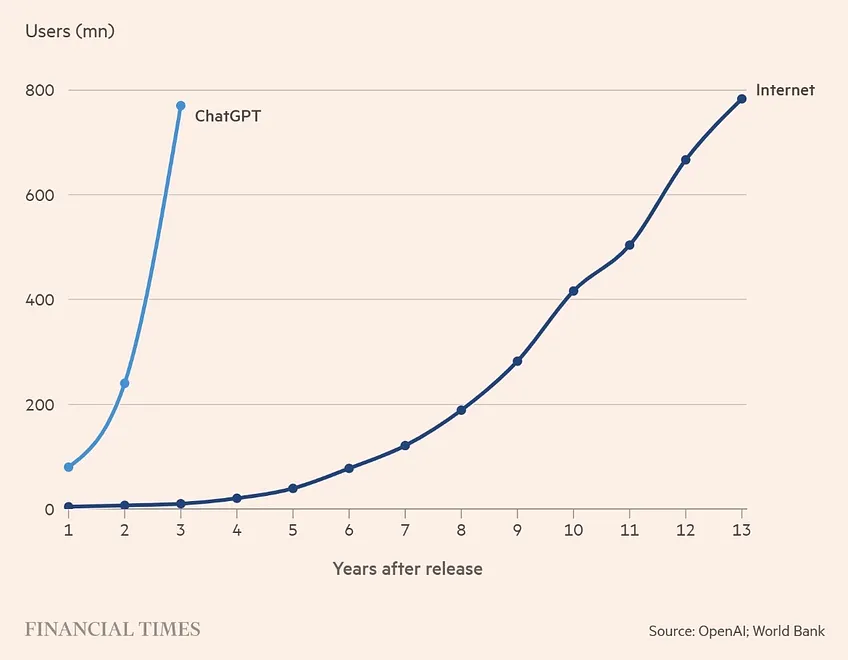
Editor’s Note: AI is spreading nearly twice as fast as the internet, and Porter believes it could create a brutal wealth divide between the people who profit from this revolution and those it leaves behind.
In his recent broadcast, he sits down with tech expert Luke Lango to reveal how to position your money before that divide becomes permanent.
GO HERE TO WATCH IT NOW.
 
“Your life, as it has been, is over.
From this time forward, you will service us.”
If you ever watched Star Trek: The Next Generation, you probably remember those words…
Spoken by Captain Jean-Luc Picard after he has been assimilated by the Borg, his face disfigured and his voice drained of all human emotion.
The Borg, a collective machine intelligence, are frightening because they do not threaten or argue. Their assimilation of all life in the universe is simply an inevitability.
That scene has been on my mind lately because it is about as good a metaphor as I know for the unstoppable spread of artificial intelligence.
Not because machines are about to turn us into mindless servants (we already have TikTok for that)... but because AI is advancing without any need for public agreement or approval. It has reached a Borg-like inevitability.
It’s not waiting for Washington to make up its mind or for the average American to decide whether any of this is a good idea.
Once software or a machine can perform useful work at a fraction of the cost, its adoption becomes an inevitable economic compulsion.
And the speed with which it is tearing through our civilization is staggering.
A study from the Federal Reserve Bank of St. Louis found that 39% of Americans between the ages of 18 and 64 had used generative AI within roughly two years of its mass-market introduction.
At the comparable point, internet adoption was around 20%. The internet took approximately five years to reach the level AI reached us in less than two.
Until now, nothing in our lifetimes had spread as quickly as the internet. Based on the adoption data cited above, AI is moving nearly twice as fast.
AI adoption chart
Many investors will look at that curve and conclude that it’s time to dump a load of cash into AI stocks.
But that’s where the trouble begins, because recognizing an inevitable technology is not the same thing as understanding who will make money from it.
Stranded on the wrong side of history
In 1975, a Kodak engineer named Steve Sasson built the first self-contained digital camera. It weighed eight pounds, required 23 seconds to record a black-and-white image, and stored the result on a cassette tape.
Sure, the device was crude, but its potential impact was enormous. Kodak’s own engineer had invented a future in which people would no longer need film.
The management understood that potential perfectly well, and it terrified them. Because Kodak’s very existence depended on selling film. So, the company spent years defending the economics that its own invention was destroying.
By the time digital photography became impossible to resist, Kodak had lost both the habit and the ability to adapt. It entered bankruptcy in 2012.
Blockbuster had even less of an excuse to get steamrolled by technology. In 2000, Reed Hastings and Marc Randolph offered to sell Netflix to Blockbuster for $50 million. The Blockbuster executives reportedly struggled not to laugh.
Roughly a decade later, Blockbuster was bankrupt and Netflix was fast becoming the new distribution system for filmed entertainment. That was one of the more expensive chuckles in business history.
The internet boom taught me that history acts without mercy to people who can see a technological change in front of them but continue on in futility, unwilling to accept or embrace it.
In hindsight, the rise of the online world was obviously unstoppable.
Yet even some of the most respected publications of the day were deeply skeptical of the companies at the frontier.
In May 1999, Barron’s famously ran a cover story titled “Amazon.bomb,” declaring: “Investors are beginning to realize that this storybook stock has problems.”
I recommended Amazon two months before Barron’s ran that story. I saw something different I guess. I saw that Amazon had an undeniable business model. The shares have since risen more than 7,000%.
Years later, after using Shopify to operate one of my own businesses, our research recommended the stock in March 2016. We closed the position 18 months later with a 256% gain.
My interest in Bitcoin came from the same basic observation. The internet had created a genuinely scarce digital asset that could move around the world without relying on the traditional financial system.
These were very different investments, and the best examples of what can happen when everything goes right for us. I’m not claiming that happens every time. And, of course, past performance doesn’t tell us what will happen in the future.
But the question was always the same simple one: What becomes more valuable because this technology exists?
That is the question investors must answer about AI right now.
Betting on the inevitable
AI technology (in many different forms) will touch practically every company in America. But it will not reward all of them equally.
Enormous sums, trillions of dollars, are already pouring into semiconductors and the power-hungry data centers required to run the models.
Some businesses will turn that colossal buildout into decades of cash flow and investment returns for shareholders.
A great many more will discover that spending money on an indispensable technology does not make the spender indispensable.
The Great AI Divide will not be between people who believe in AI and people who do not. It will be between those who own the scarce, profitable parts of this new economy and those whose livelihoods are being repriced by it.
That’s why I recorded this sit-down with Luke Lango, one of the best technology investors I know. Luke recommended AMD in 2015, and he has spent years studying how these technological shifts create, and destroy, fortunes.
In our critical broadcast, Luke and I explain where we believe the durable economics of AI will appear and why several of today’s most popular stocks may disappoint their investors.
We also reveal the name and ticker of a little-known spin-off from a century-old American business that we believe could become crucial to the data-center buildout.
The Borg were right: resistance is futile. So, for investors, the only useful question that remains is this:
Will your capital be positioned before or after AI completely takes over the world?
Good investing,
Porter Stansberry

Rockets Up, Feathers Down

What the Headlines Lead With

Most commodity coverage this week focused on the round trip. Arabica pushed above $3 on Tuesday as the Brazilian real touched a near five-month high, which makes Brazilian growers slower to sell.

Then Brazil’s export figures landed. September shipments jumped more than 20% from a year earlier, and arabica fell 3.9% on Wednesday. By Friday it sat almost exactly where it began the week.

The bigger trend is down. A year ago, arabica traded near $4 a pound. Large Brazilian harvests have pulled it back since.

Why the Shelf Lags

Economists have a name for this pattern: rockets and feathers. Prices rise like rockets when costs jump. They drift down like feathers when costs fall.

Coffee shows why. Roasters buy beans months ahead, often under contracts locked at higher prices. The beans in today’s bag may have been bought near last year’s peak.

Tariffs, freight, roasting and packaging also sit between the farm and the shelf. None of those costs fall when futures do.

The shelf price has started to move. The average pound of ground coffee stood near $9.72 in April and slipped to $9.30 by August. That is a 4% drop against a bean down about 28%.

What It Means for Your Money

For households, relief will arrive slowly. If the pattern holds, shelf prices keep easing through the winter. They will not fall as far or as fast as the futures did.

For the inflation picture, coffee is a small line with a loud voice. Shoppers notice it every morning, which shapes how they feel about prices generally.

Our view: the gap between bean and bag is where the margin sits right now. Companies that buy beans cheaply today and still sell near last year’s shelf prices should see fatter margins.

The Week Ahead

September CPI arrives Wednesday, October 14. Watch the food-at-home line and the coffee index inside it. The coffee index has fallen three months in a row. A fourth drop would confirm the slide is reaching consumers.

The big banks report earnings this week, and their comments on consumer spending will add context to Friday’s weak sentiment survey.

Worth watching: arabica near $2.85. A break below it would put fresh pressure on roasters to cut shelf prices before the holidays.

The bean answers to the weather. The bag answers to last year’s invoices.

Recommended for you

View all
caret-right