The Ledger Letter — The S&P Is Priced for a Quiet Autumn. Nothing Else Is.
The window opened last week. The S&P hasn’t noticed.
The Ledger Letter
Finance Studio Advisors · Monday, August 24, 2026
Market Intelligence Partner · Brownstone Research
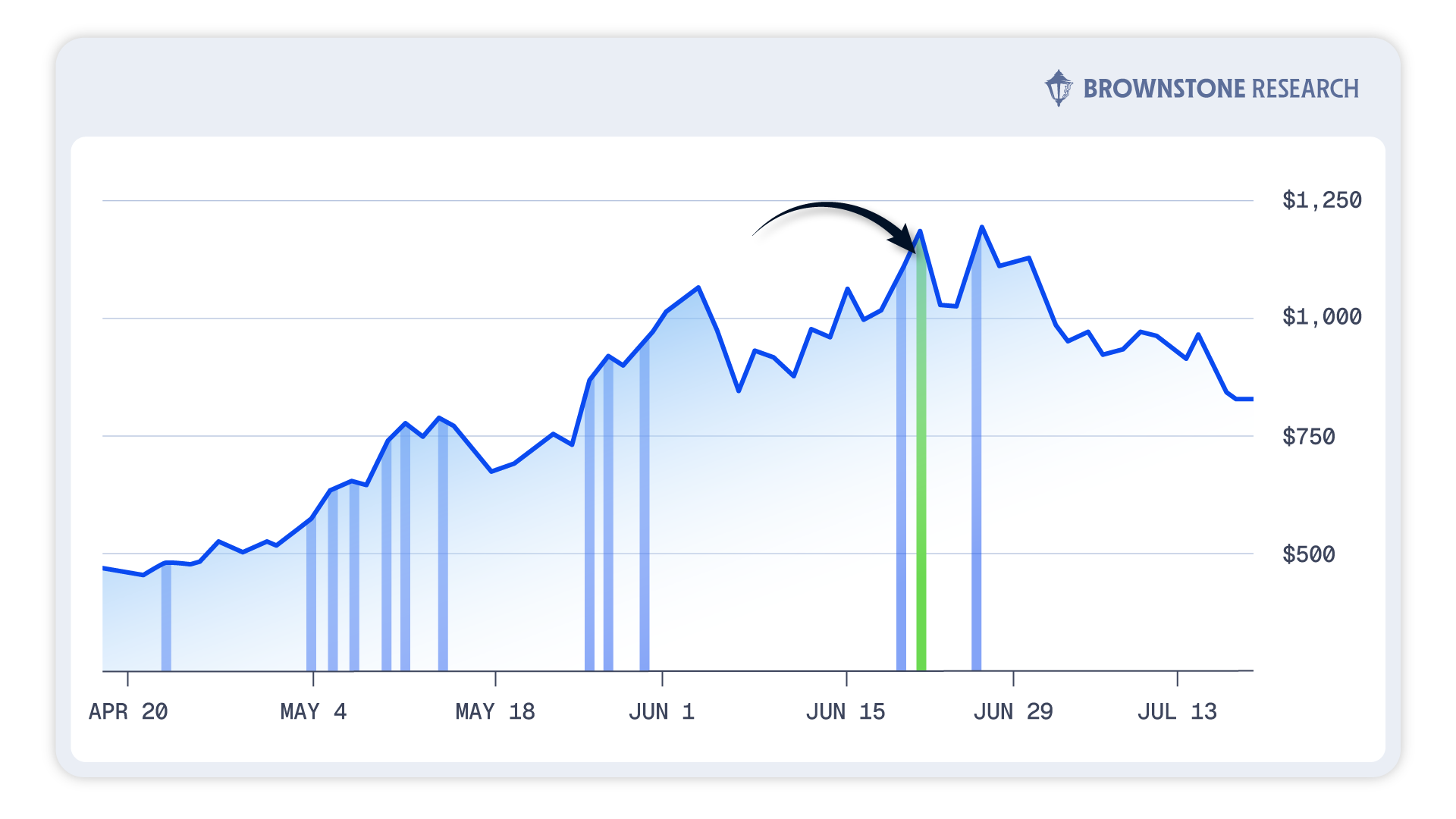
We caught Wall Street in the act.
Take a look:
Image
Right here in June…
BlackRock made a strange move.
It put nearly $1 billion into a forgotten-about corner of the AI market.
In fact, we flagged a number of strange transactions from gigantic firms like Goldman Sachs and JPMorgan…
Into two specific stocks in this critical but rarely talked about corner of AI.
I believe these companies are loading up ahead of November 3.
Paid advertisement. Finance Studio Advisors is compensated when readers respond to this offer. The copy above is the advertiser’s own and is not editorial opinion.

The S&P Is Priced for a Quiet Autumn. Nothing Else Is.

The S&P closed Friday at 7,674.37. The fear index printed its low of the year last Monday and has climbed since. The 30-year sits at 5.23%, gold at $4,590, the dollar under its 200-day. This week hands the tape three verdicts in five days: PCE Wednesday morning, Nvidia Wednesday night, Warsh at Jackson Hole Friday at 10. And since 1990, every midterm year has taken at least 7% out of the average stock between late August and mid-October.
The Breakdown
Today’s disagreement: equities are priced for a quiet autumn; volatility, the long bond, and gold are priced for a busy one.
01
Verdict Night
Nvidia reports Wednesday after the close. Wall Street looks for roughly $92 billion in revenue, about double a year ago. Options price a move near 6 to 7% in either direction, and the stock has fallen after each of its last four reports.
02
The Fear Index Woke Up
The volatility index bottomed for the year last Monday and has been climbing since, while the S&P held near record ground. Somebody started paying up for protection they did not want a week earlier. That bid does not show up in the index print.
03
The Six-Week Window
Since 1990, every midterm election year has handed the average stock a pullback of at least 7% between late August and mid-October. It is not a forecast and it does not care which party wins. It is a seasonal record, and the window opened last week.
Friday, by the Numbers
S&P 5007,674.37  +0.43% Fri · lower on the week
30-Year Treasury Yield5.23% — near multi-decade high
10-Year Treasury Yield4.69%
Gold Spot$4,590.51  +5% on the week
Dollar Index (DXY)99.60  below the 200-day
Friday, Aug 21, 2026 close. Sources: Federal Reserve H.15, Yahoo Finance, USAGOLD, Barchart. Midterm-year seasonality: average-stock drawdowns, late August to mid-October, 1990 to present.

The Six Weeks Nobody Prices In

Everyone Is Trading Wednesday Night

Every desk note this morning is about one moment: Nvidia’s report Wednesday after the bell. Fair enough. It is the largest single repricing event on the calendar, and options are paying for a 6 to 7% move. But a report is an event, and events pass by Thursday lunchtime. What sits in front of this market is not an event. It is a six-week window with a documented history, and it opened while everyone was reading buyback headlines.

Four Markets, One Dissenter

Run the row. The 30-year closed Friday at 5.23%, near a multi-decade high per the Fed’s H.15 release, and the 10-year at 4.69%. Gold spot ran to $4,590.51, up roughly 5% on the week, its biggest weekly move of the four. The dollar index sat at 99.60, under a declining 200-day. And the volatility market bottomed for the year last Monday and has been bid since. Bonds, metals, currencies and volatility all moved last week in the direction of more risk ahead, not less. Equities closed Friday up 0.43% and finished the week lower, which is a tape arguing with itself. One of those two groups is reading the next six weeks wrong, and only one of them has a seasonal record on its side.

How a Seven Percent Autumn Actually Works

The mechanism is not politics, and it does not depend on who wins in November. It is crowding. Positions go into the autumn long and lightly hedged, and the calendar then asks the same question three times in three sessions. PCE inflation and the second GDP estimate hit Wednesday at 8:30. Nvidia prints after that day’s close. A new Fed chair gives his first Jackson Hole keynote Friday at 10, with markets pricing roughly a one-in-three chance of a September hike, and Treasury runs its two-, five- and seven-year auctions across the same stretch. If the long end keeps grinding higher while equity multiples sit at record ground, the discount rate does the work and it does it to the index, not to the two or three names in your account you actually worry about. That is where seven percent comes from: not a crash, an air pocket in the part of the portfolio nobody is watching.

What Would Prove Me Wrong Today

Today has no data, which makes it the cleanest read of the week. Watch two prints. If the 30-year closes above 5.30%, the level it touched on August 17, while the S&P holds within reach of its highs, the gap in this edition just got wider and the seasonal read is live. If instead the long end slips under 5.15% and volatility gives back last week’s bid, then the equity tape was right, I was early, and I will say so tomorrow. Nvidia does not settle this on Wednesday. The bond market and the volatility market settle it, and they start voting at 9:30 this morning.

The calendar doesn’t have to be right about November. It only has to be right about October.
The Ledger Letter
When markets disagree, the signal is in the disagreement.
This newsletter is for informational purposes only and does not constitute investment advice. Past performance is not indicative of future results.

Recommended for you

View all
caret-right